

Tesla Model 3 Long-Term Review After 6 Years & 85,000 Miles: Battery Health, Real Costs, and Reliability
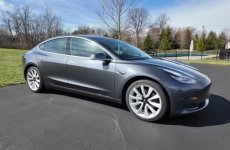
Owning a 2019 Tesla Model 3 Standard Range Plus for six years and 85,000 miles offers a clear, real-world look at what long-term EV ownership is actually like. This review covers battery health, charging costs, energy use, tyre wear, maintenance, and what has or hasn’t gone wrong. No hype, no sponsorship, just genuine ownership experience.2. Battery Health & Degradation
2.1 What to Expect
Battery degradation is a key concern for EV owners, but most Tesla Model 3 packs hold up well. Real-world data shows 6–7-year-old Teslas typically retain around 86–93% of their original battery capacity. Most owners report a steeper decline in the first year, followed by slow, predictable loss of 1–2% annually.
2.2 Your Case: 6 Years, 85,000 Miles
Your battery likely retains 85–90% of its original capacity normal and healthy for this age. Contributing factors include charging habits, climate, driving style, and how often fast-charging was used.
2.3 What You May Have Noticed
- Slightly reduced full-charge range (e.g., ~250 miles new → ~225–235 miles now).
- More conscious charging: avoiding 0%, keeping daily charge around 70–80%.
- Small increase in energy use (Wh/mile) with age.
- No major battery repairs or replacements.
2.4 Key Takeaway
Battery health remains strong. Degradation is noticeable but manageable, and the car continues to be fully usable for daily driving and long trips.
3. Energy Use & Charging Costs
3.1 Energy Consumption
Typical consumption for a Model 3 SR+ is 250–300 Wh/mile. At ~270 Wh/mile, 85,000 miles equals roughly 23,000 kWh consumed.
3.2 Charging Costs
If you charge mainly at home at ~€0.15/kWh, total energy cost over six years is about €3,450, or €575 per year. Public fast-charging raises costs but still remains lower than petrol or diesel fuel.
3.3 Home Charging Setup
Any costs for installing a home wall charger or electrical upgrades are usually one-time and low compared to fuel savings.
3.4 Efficiency Drift
With age, colder weather, and heating/cooling use, energy consumption may increase slightly completely normal.
Bottom line: Charging remains dramatically cheaper than fueling an ICE car.
4. Tyre Wear, Brakes & General Wear
4.1 Tyres
EVs use tyres faster due to instant torque and higher weight. Across six years, owners often go through 2 full sets. Estimated total tyre cost: €800–€1,200.
4.2 Brakes
Thanks to regenerative braking, brake pads and discs wear very slowly. You may have needed only lubrication or a single pad replacement.
4.3 Suspension, Exterior & Interior
- Suspension components may need inspection after ~80k miles.
- Minor stone chips, swirl marks and winter salt exposure are normal.
- Interior usually holds up well; the minimalist design ages slowly.
4.4 Other Consumables
- 12V battery often needs replacement between 5–7 years.
- Cabin filters replaced roughly every 2–3 years.
- Wipers, bulbs, sensors replaced as needed.
5. Maintenance, Repairs & Unexpected Issues
5.1 Scheduled Maintenance
EVs require far less maintenance than ICE cars no oil, filters, plugs, exhaust. Over six years you likely had:
- Cabin filter changes
- Brake fluid check
- Tyre rotation & alignment
- Software updates
- Occasional recall/service visit
5.2 Unexpected Issues
Possible but not severe long-term Model 3 issues:
- 12V battery replacement
- Minor infotainment or hardware glitches
- Trim or paint corrections
- Home charger cable wear
High-voltage battery failures remain rare, especially if charging habits were healthy.
5.3 Cost Summary (Approx.)
- Energy cost: €500–€600/year
- Tyres & consumables: €150–€200/year
- Maintenance: €100–€150/year
- Unexpected costs: €100–€300/year
Total annual running cost: €800–€1,000 - extremely low compared to any petrol or diesel equivalent.
6. Daily Usability After 6 Years
6.1 Range
Even with reduced capacity, a usable range of ~225–235 miles (360–380 km) remains practical for everyday driving. Home charging eliminates most range concerns.
6.2 Charging Convenience
Daily charging to 70–80% and topping to 100% only before road trips helps preserve battery life. Supercharger use remains smooth but unnecessary for most daily needs.
6.3 Comfort & Tech
The Model 3’s quiet cabin, software updates, and minimalist design help it feel modern even after six years. Most features remain up-to-date thanks to OTA updates.
6.4 Future Considerations
As the car ages:
- Resale value depends on battery health and condition.
- Battery degradation will continue gradually.
- A full battery replacement becomes a possibility after 10+ years but often isn’t needed.
7. What Went Wrong?
A realistic long-term summary:
- 12V battery likely needed replacement.
- Minor software bugs or occasional sensor issues.
- Cosmetic wear inside and outside.
- No major battery or drivetrain failures, which is consistent with Model 3 reliability data.
8. 6-Year Verdict: Would You Do It Again?
Most owners and likely you as well would say yes. The Model 3 has:
- Low running costs
- Low degradation
- High comfort and usability
- Modern software
- Strong long-term reliability
Some trade-offs exist (range loss, tyre wear, occasional software issues), but overall the long-term ownership experience is overwhelmingly positive.
9. Final Thoughts
Six years with a Tesla Model 3 proves that EVs can remain practical, efficient, affordable, and enjoyable far beyond the warranty period. Range anxiety fades, charging becomes routine, and maintenance nearly disappears. With thoughtful charging habits and basic care, the Model 3 continues to deliver strong performance and low operating costs well into high mileage.
