What's new

Comparison Hybrid Ute Showdown 2026: The Workhorse vs. The Tech Disruptors

Admin

Administrator
Staff member

Let’s be real: the era of Ford’s undisputed dominance is being challenged by raw battery specs. We’ve moved past the "exciting matchup" phase 2026 is about whether traditional engineering can survive the onslaught of Chinese high-capacity PHEV platforms.


The Ranger PHEV is a calculated move for the "safe" buyer, but looking at the Shark 6 and the Cannon Alpha, the gap in electrification is staggering. However, as anyone who actually uses their truck for work knows, a spec sheet doesn't tell the whole story.

Powertrain & Performance

ModelPowertrainTotal OutputElectric Range (est)Towing Capacity
Ford Ranger PHEV2.3L Turbo I4 + Electric~336 hp / 500 Nm~45–50 km (EV mode)3,500 kg
BYD Shark 61.5L Turbo + Dual Motors (DMO)~430 hp / 650 Nm (est)~100–120 km EV (WLTC)2,500–2,800 kg (est)
GWM Cannon Alpha PHEV2.0L Turbo + Electric~350 hp / 650 Nm (est)~80–90 km EV (NEDC/WLTP)3,000 kg (claimed)

Verdict:​

  • BYD Shark 6 dominates on performance and EV range (thanks to its advanced DMO platform).
  • Ranger PHEV leads for towing and ruggedness, and likely better long-term support.
  • Cannon Alpha PHEV sits in the middle, good balance but less proven than Ford or BYD.
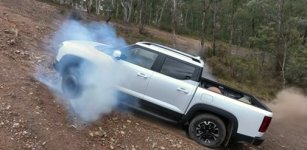
ford ranger phev vs byd shark 6 vs gvm cannon alpha.jpg

Utility & Features

ModelDrivetrainPayloadInterior TechSpecial Features
Ranger PHEVAWD~1,000 kg (est)SYNC 4 w/ large touchscreenPro Power Onboard (exportable power), selectable drive modes
BYD Shark 6AWD~835 kg12.8" rotating screen, DiPilot ADASDMO hybrid system, e4 platform
Cannon Alpha PHEVAWD~1,000 kgTwin screens, ADASLux interior (massage seats), tank turn (rumored)

Verdict:​

  • Ranger is most “ute-like” built for trade + adventure.
  • BYD is more tech-forward, SUV-like in comfort.
  • GWM Alpha impresses with luxury and interesting features (but real-world durability is untested).

Battery & Charging

ModelBattery Size (est)EV RangeCharging Speed
Ford Ranger PHEV~15–20 kWh~50 kmUnknown (likely ~7kW AC)
BYD Shark 6~30 kWh100–120 kmFast charging (DC + AC)
GWM Alpha PHEV~30 kWh~80–90 kmFast charging (claimed DC)
Verdict:
  • BYD Shark 6 has true EV daily driving range.
  • GWM is close, but less range than BYD.
  • Ford is more hybrid-first, EV range is modest.

Pricing & Value (Est.)

ModelEst. Price (AUD/NZD)Notes
Ford Ranger PHEV~$80,000+ AUDPremium variant (likely Wildtrak)
BYD Shark 6~$70,000 AUDVery competitive pricing for spec
GWM Cannon Alpha PHEV~$65,000–75,000 AUDValue-focused, high spec
Verdict:
  • GWM and BYD undercut Ford significantly.
  • Ford will be priced higher but offers more brand trust and towing capacity.

Summary: Which One’s for You?

Ford Ranger PHEV

  • Best For: Tradies, off-roaders, and brand-loyal buyers needing heavy towing and durability.
  • Strengths: Proven platform, towing, ruggedness, aftersales support.

BYD Shark 6 PHEV

  • Best For: Tech-forward buyers who want the longest EV range in a ute.
  • Strengths: Advanced drivetrain, comfort, best EV capability, fast charging.

GWM Cannon Alpha PHEV

  • Best For: Buyers wanting value, luxury, and solid specs for the price.
  • Strengths: Comfort, price-to-feature ratio, dual motor AWD.

Final Thought​


This isn’t just a hybrid ute comparison it’s a clash of philosophies:
  • Ford = Traditional ute, lightly electrified
  • BYD = Electrified first, ute second
  • GWM = Balanced approach with value in mind

 
Last edited:
Thanks for the breakdown, @Admin, but I think the line is even sharper in 2026. This isn’t just about the powertrain anymore; it’s about what we’re forcing these machines to do in the real world.

The BYD Shark 6 technically crushes the field with that 100km+ EV range, but let’s be honest: the second you throw 500kg of tools in the back or hook up a 2.5-tonne trailer, that "pure electric" range evaporates like mist. The BYD is a brilliant SUV replacement, but for anyone looking for a heavy-duty workhorse, the Shark’s suspension and lower towing capacity are major compromises.

A few things we aren't talking about enough:

The Ranger Advantage: Ford’s PHEV might "only" do 45-50km on battery, but it keeps the 3.5-tonne towing and the Pro Power Onboard. Anyone who has worked on a remote site knows that being able to charge your power tools directly from the truck (exportable power) is worth way more than an extra 40km of empty-bed range.

GWM & The Luxury Trap: The Cannon Alpha interior is definitely premium, but GWM’s software-heavy ADAS systems are still too intrusive. In off-road conditions or heavy weather, "over-protective" electronics often become a liability rather than a feature.

TCO (Total Cost of Ownership): By 2026, we’re seeing the used market trends. The Ranger holds its value, while the depreciation on Chinese PHEVs remains a wildcard. For fleet managers, that’s the deciding factor.

My take: The BYD is for the "urban cowboys" who want the tech, but the Ranger PHEV remains the only sensible choice for anyone who actually takes their rig into the mud from Monday to Friday.

Do you think the Ranger is worth the premium just for the brand trust and towing, or has BYD’s DMO platform reached a point where we can finally let go of traditional "tradie" requirements?

 
Top