

How Long Should You Keep an EV in North America?
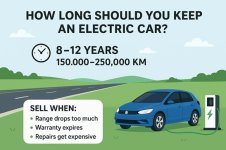
Most electric cars in the U.S. and Canada stay economically sensible for:
8–12 years
120,000–200,000 miles (190,000–320,000 km)
Why the wide range?
Because North America puts EVs through extremes:
- Canadian cold can reduce winter range by 30–40%.
- U.S. Southwest heat can degrade batteries faster.
- Long highway distances stress charging cycles more.
- Fast-charge dependency is higher outside large cities.
Still, modern EVs are surprisingly robust. Most owners can reach well over 150,000 miles before major battery decline becomes noticeable.
Battery Aging: What’s Normal in North America?
Your range after years of real-world use will depend on climate more than anything.
Average battery loss:
- 5–10% after 3 years
- 12–20% after 7–8 years
- 20–30% after 10–12 years
Colder regions (Canada, northern U.S.):
- Slower battery degradation
- BUT bigger winter range loss
Hot regions (California, Texas, Nevada, Arizona):
- Battery wears faster due to heat
- Thermal cooling systems work harder
If you live somewhere like Phoenix or Las Vegas, your battery will age faster even if you drive fewer miles.
So When Should You Sell an EV in North America?
Most North American drivers sell at one of three milestones.
1. When the battery warranty ends (8 years / 100,000–150,000 miles)
All major brands in the U.S. and Canada offer long HV battery warranties.
When that expires, resale value drops.
2. When range falls below your lifestyle needs
In dense cities, 250 km (150 miles) might be fine.
In rural states or provinces, that’s not enough.
3. When the charging tech becomes outdated
Charging speeds have exploded in the last few years:
- 50 kW standard in 2018
- 150 kW by 2021
- 250–350 kW common by 2024–2026
If your EV still struggles at 50–100 kW, long trips become frustrating.
Aging EV Costs in North America
EVs have fewer parts than gas cars—but the parts they DO have are expensive.
Typical late-life EV expenses:
1. Battery cooling system repairs ($300–$1,200 USD)
Critical in hot states. Often the first major repair.
2. Drive unit or inverter issues ($1,000–$3,000 USD)
Rare, but not unheard of—especially in older Teslas and GM models.
3. Onboard charger replacement ($700–$2,000 USD)
If this dies, you may only DC fast-charge (or not charge at all).
4. Suspension wear ($500–$1,800 USD)
North American roads + heavy EVs = faster suspension aging.
5. Brake system service ($150–$500 USD)
Regenerative braking keeps pads good for years…
…but salt from Canadian winters eats brake calipers alive.
6. High-voltage battery module repairs ($1,500–$4,000 USD)
Still cheaper than a full battery pack replacement.
Which EV Brands Last the Longest in North America?
Not all EVs are built equally especially in this climate.
1. Tesla (best charging, strong battery longevity)
- Designed for U.S. climate extremes
- Heat pumps, good thermal systems
- Excellent fast-charging network
- Drivetrain lasts long
2. Hyundai / Kia
- Very efficient
- Batteries degrade slowly even in heat
- Reliable motor & inverter systems
- Good fast-charging speeds
3. Toyota
- Entered EV market later, but extremely reliable
- Battery management is top-tier
- Low failure rate in thermal systems
4. Ford
- Good durability
- Decent battery life
- Popular in trucks (F-150 Lightning)
5. GM (Chevrolet, Cadillac)
- Newer Ultium platform is much improved
- Older Bolt batteries had recall issues
6. Volkswagen / Mercedes / BMW
- Comfortable, good engineering
- Software issues common in North America
- Repairs expensive
Realistic EV Ownership Timeline (North America 2026)
Here’s how most owners should think about it:
Keep 5–8 years:
Best for people who want the newest tech, fastest charging, and highest resale value.
Keep 8–12 years:
Economically ideal—use the battery warranty to the fullest.
Keep 12+ years:
Only recommended if you:
- live in a mild climate
- don’t road-trip often
- are okay with reduced range

 Final Takeaway: How Long Should YOU Keep Your EV?
If you remember just one thing:
The optimal ownership period for most North American EV owners is 8–12 years or 120,000–200,000 miles.
After that, range loss, heat wear, and repair costs start to rise—especially in hot states.
And when it comes to long-lasting brands?
Tesla, Hyundai/Kia, and Toyota offer the best long-term reliability with the fewest expensive surprises.