

tesla 1
Member
Adding a traditional alternator to an electric car is not feasible for extending range in the way it works for a gasoline engine vehicle. Here’s why it doesn’t work as expected:
Alternator Mechanics in Gasoline Engines vs. Electric Cars: In gasoline or diesel cars, an alternator converts mechanical energy from the engine into electrical energy to recharge the 12V battery and power electronics. It’s powered by a belt connected to the engine, which constantly generates rotational energy. However, electric cars don’t have combustion engines and therefore have no mechanical source (like a crankshaft) to run an alternator effectively.
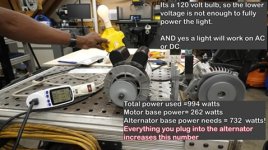
Energy Efficiency and the Law of Conservation of Energy: In an electric car, an alternator would have to draw energy from the main drive battery (the same battery powering the car). This setup would create a loop where energy goes from the battery to the motor, to the alternator, and back to the battery. This closed system would result in energy losses due to inefficiencies (heat, friction, etc.), meaning it would consume more power than it produces, reducing the overall range rather than extending it.
Battery and Regenerative Braking: Electric cars are designed with regenerative braking systems, which already function like an alternator but with much higher efficiency. During braking, they recover kinetic energy and convert it back into electrical energy to recharge the battery. This process is much more efficient than using a traditional alternator, as it captures otherwise lost energy without drawing additional power from the battery.
Why Don’t Electric Cars Use Alternators to Charge the Main Battery? Electric vehicles are designed to maximize range by being as energy-efficient as possible. Adding an alternator would add weight, introduce inefficiencies, and ultimately reduce range rather than extending it.
In short, adding an alternator to an electric car won’t extend its range and may even diminish it. Electric cars rely on external charging sources, efficient energy management, and regenerative braking to extend range in practical, effective ways.
Youtube
Alternator Mechanics in Gasoline Engines vs. Electric Cars: In gasoline or diesel cars, an alternator converts mechanical energy from the engine into electrical energy to recharge the 12V battery and power electronics. It’s powered by a belt connected to the engine, which constantly generates rotational energy. However, electric cars don’t have combustion engines and therefore have no mechanical source (like a crankshaft) to run an alternator effectively.
Energy Efficiency and the Law of Conservation of Energy: In an electric car, an alternator would have to draw energy from the main drive battery (the same battery powering the car). This setup would create a loop where energy goes from the battery to the motor, to the alternator, and back to the battery. This closed system would result in energy losses due to inefficiencies (heat, friction, etc.), meaning it would consume more power than it produces, reducing the overall range rather than extending it.
Battery and Regenerative Braking: Electric cars are designed with regenerative braking systems, which already function like an alternator but with much higher efficiency. During braking, they recover kinetic energy and convert it back into electrical energy to recharge the battery. This process is much more efficient than using a traditional alternator, as it captures otherwise lost energy without drawing additional power from the battery.
Why Don’t Electric Cars Use Alternators to Charge the Main Battery? Electric vehicles are designed to maximize range by being as energy-efficient as possible. Adding an alternator would add weight, introduce inefficiencies, and ultimately reduce range rather than extending it.
In short, adding an alternator to an electric car won’t extend its range and may even diminish it. Electric cars rely on external charging sources, efficient energy management, and regenerative braking to extend range in practical, effective ways.
Youtube