

The Mazda CX-5 and CX-60 are both SUVs in Mazda's lineup, each catering to different market segments and offering distinct features. Here's a detailed comparison between the two models:
Dimensions and Weight:
CX-5:
Length: 455 cm
Width: 184.2 cm
Height: 168 cm
Wheelbase: 270 cm
Ground Clearance: 18.5 cm
Curb Weight: Approximately 1435 kg
Cargo Volume: 506 liters (up to 1620 liters with seats folded)
CX-60:
Length: 474.5 cm
Width: 189 cm
Height: 168 cm
Wheelbase: 287 cm
Ground Clearance: 17.6 cm
Curb Weight: Approximately 1890 kg
Cargo Volume: 570 liters (up to 1726 liters with seats folded)
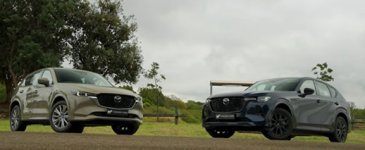
Carsized
Engine Options and Performance:
CX-5:
Offers a range of engines, including a 2.5L turbocharged four-cylinder producing up to 170 kW (228 hp) and 420 Nm of torque.
Fuel Efficiency: Approximately 8.2L/100km combined.
CX-60:
Introduces new powertrains, including:
3.3L inline-six turbo petrol with 209 kW (280 hp) and 450 Nm.
3.3L inline-six turbo diesel with 187 kW (251 hp) and 550 Nm.
2.5L plug-in hybrid (PHEV) combining a petrol engine with an electric motor, delivering a combined output of 241 kW (323 hp) and 500 Nm.
Fuel Efficiency:
PHEV variant offers improved efficiency, especially for short trips on electric power alone.
Towing Capacity:
CX-5:
Maximum towing capacity of up to 2000 kg, depending on the engine and drivetrain configuration.
CX-60:
Enhanced towing capacity, with certain configurations capable of towing up to 2500 kg.
Interior and Features:
CX-5:
Premium interior with available Nappa leather upholstery in higher trims.
Infotainment system featuring a 10.25-inch display with Apple CarPlay and Android Auto.
Available Bose 11-speaker sound system in top trims.
CX-60:
Elevated luxury with options like Nappa leather, ambient lighting, and advanced driver personalization systems.
Larger 12.3-inch infotainment display in higher trims, with comprehensive connectivity features.
Advanced safety suite, including adaptive cruise control, lane-keeping assist, and a 360-degree camera system.
Pricing:
CX-5:
Starting around €25,190 in Europe, with top trims reaching up to €46,150.
CX-60:
Positioned as a more premium offering, starting at approximately €46,150, with higher-end models exceeding €60,000, especially for the PHEV variant.
Pros and Cons:
CX-5 Pros:
Agile handling and comfortable ride.
Competitive pricing within its segment.
Well-appointed interior with quality materials.
CX-5 Cons:
Less cargo and passenger space compared to larger SUVs.
Higher trims approach the price range of more premium competitors.
CX-60 Pros:
Robust engine options, including efficient hybrid variants.
Spacious interior with advanced luxury features.
Higher towing capacity suitable for larger loads.
CX-60 Cons:
Higher starting price, reflecting its premium positioning.
Larger dimensions may be less suitable for urban driving.
Conclusion:
The Mazda CX-5 is a well-rounded SUV that offers a balance of performance, comfort, and value, making it suitable for small families or individuals seeking a reliable daily driver. The CX-60, on the other hand, targets the premium segment with its larger size, more powerful engine options, and upscale features, appealing to those who desire a more luxurious and spacious SUV experience.
For a visual comparison and further insights, you might find the following video helpful:
Youtube
Dimensions and Weight:
CX-5:
Length: 455 cm
Width: 184.2 cm
Height: 168 cm
Wheelbase: 270 cm
Ground Clearance: 18.5 cm
Curb Weight: Approximately 1435 kg
Cargo Volume: 506 liters (up to 1620 liters with seats folded)
CX-60:
Length: 474.5 cm
Width: 189 cm
Height: 168 cm
Wheelbase: 287 cm
Ground Clearance: 17.6 cm
Curb Weight: Approximately 1890 kg
Cargo Volume: 570 liters (up to 1726 liters with seats folded)
Carsized
Engine Options and Performance:
CX-5:
Offers a range of engines, including a 2.5L turbocharged four-cylinder producing up to 170 kW (228 hp) and 420 Nm of torque.
Fuel Efficiency: Approximately 8.2L/100km combined.
CX-60:
Introduces new powertrains, including:
3.3L inline-six turbo petrol with 209 kW (280 hp) and 450 Nm.
3.3L inline-six turbo diesel with 187 kW (251 hp) and 550 Nm.
2.5L plug-in hybrid (PHEV) combining a petrol engine with an electric motor, delivering a combined output of 241 kW (323 hp) and 500 Nm.
Fuel Efficiency:
PHEV variant offers improved efficiency, especially for short trips on electric power alone.
Towing Capacity:
CX-5:
Maximum towing capacity of up to 2000 kg, depending on the engine and drivetrain configuration.
CX-60:
Enhanced towing capacity, with certain configurations capable of towing up to 2500 kg.
Interior and Features:
CX-5:
Premium interior with available Nappa leather upholstery in higher trims.
Infotainment system featuring a 10.25-inch display with Apple CarPlay and Android Auto.
Available Bose 11-speaker sound system in top trims.
CX-60:
Elevated luxury with options like Nappa leather, ambient lighting, and advanced driver personalization systems.
Larger 12.3-inch infotainment display in higher trims, with comprehensive connectivity features.
Advanced safety suite, including adaptive cruise control, lane-keeping assist, and a 360-degree camera system.
Pricing:
CX-5:
Starting around €25,190 in Europe, with top trims reaching up to €46,150.
CX-60:
Positioned as a more premium offering, starting at approximately €46,150, with higher-end models exceeding €60,000, especially for the PHEV variant.
Pros and Cons:
CX-5 Pros:
Agile handling and comfortable ride.
Competitive pricing within its segment.
Well-appointed interior with quality materials.
CX-5 Cons:
Less cargo and passenger space compared to larger SUVs.
Higher trims approach the price range of more premium competitors.
CX-60 Pros:
Robust engine options, including efficient hybrid variants.
Spacious interior with advanced luxury features.
Higher towing capacity suitable for larger loads.
CX-60 Cons:
Higher starting price, reflecting its premium positioning.
Larger dimensions may be less suitable for urban driving.
Conclusion:
The Mazda CX-5 is a well-rounded SUV that offers a balance of performance, comfort, and value, making it suitable for small families or individuals seeking a reliable daily driver. The CX-60, on the other hand, targets the premium segment with its larger size, more powerful engine options, and upscale features, appealing to those who desire a more luxurious and spacious SUV experience.
For a visual comparison and further insights, you might find the following video helpful:
Youtube
Last edited:
