

Hybrid Police Cars Exist - Meet the Ford Police Interceptor Utility
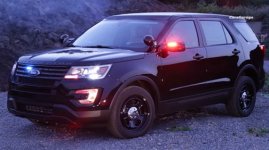
If you saw a headline like “99% of criminals hate this SUV” about a police-grade Explorer, you might wonder: can it be hybrid too? The answer: yes absolutely. And not just as a concept, but real fleet vehicles in active use in the USA.
Since 2020, the Police Interceptor Utility (PIU) has been offered with a hybrid drivetrain: a 3.3-liter V6 paired with an electric motor and a lithium-ion battery pack.
As of the 2025 model year, this hybrid is the standard powertrain for PIU meaning most new police-SUVs of this type are hybrids.
Technical Specs & Performance: What the Hybrid PIU Offers
Here are the key numbers for the 2025 Ford Police Interceptor Utility Hybrid:
- Combined output: 318 hp (horsepower) with 322 lb-ft of torque.
- Drivetrain: 3.3 L V6 + electric motor, with a 10-speed automatic transmission and all-wheel drive (AWD).
- Hybrid battery: 1.5 kWh lithium-ion battery pack sits under the rear seat — design avoids intruding into cargo/passenger space.
- Towing / payload (civil-spec data may vary for police-spec): up to 5000 lbs (~ 2268 kg) for towing; gross vehicle weight rating (GVWR) ~6840 lbs.
- Cargo & interior volume (when seats folded): generous, comparable with civilian Explorer, making it practical for police gear / equipment. newcarsforsale.com
Although official “fuel economy” figures for the 2025 hybrid PIU are listed as “TBD” (to be determined) for city/highway by some dealers.
Still, the hybrid system yields significant operational savings for police work especially due to long idle periods.
Indeed, according to the manufacturer, the hybrid drivetrain can save a police department up to 838 gallons (~ 3168 liters) of fuel per year per vehicle. Over 6 years, that’s roughly US$17,500 savings (assuming certain fuel price levels).
Why Hybrid Is a Smart Fit for Police Use
• Efficiency & Idle-Time Savings
Police cars often idle to power lights, radios, computers, surveillance gear, A/C, etc. A hybrid can power all that without running the gas engine constantly, drastically cutting fuel consumption and wear.
• Same Space and Load Capability
Despite having battery + motor, the hybrid PIU preserves full cargo space, passenger compartment and load/towing specs so police don’t trade practicality for “green credentials.”
• Performance & Pursuit Readiness
With 318 hp and AWD, hybrid PIU remains “pursuit-rated.” According to tests by law enforcement agencies, previous hybrid H-utility cars beat older gas-only versions in acceleration and performance under real conditions.
• Safety & Police-Specific Features
The 2025 PIU retains a host of police-oriented features: structural reinforcement, safety systems, and specialized police features like the Police Perimeter Alert (monitoring 270° around vehicle to detect suspicious movement), plus “Manual Pursuit Mode” for optimal control during chases, a “Dark Car Mode” for stealth operations, and upgraded telematics. ford.com
Hence for police departments, hybrid means lower running costs, modern gear readiness, plus good performance a compelling package. Lincoln Media
What It Means for Civil Consumers - Hybrid Explorer vs Police Version
- Interestingly, the heavy demand by police forces for the hybrid Interceptor has impacted civilian-market availability. For example: reports say that for the 2024 model year, much of the hybrid production was allocated to police fleets, leaving little capacity for civilian hybrid Explorer orders. Autó-Motor
- As a result at least in the U.S. the “civilian hybrid Explorer” is currently (as of 2024/2025) not widely available, even though the hybrid PIU thrives. Green Car Reports
- So, yes while hybrid police cars exist en masse, if you’re a regular buyer hoping to grab a hybrid Explorer, it might be hard or require waiting.
Limitations & What Hybrid Doesn't Solve
- Publicly available fuel-economy data for the 2025 PIU hybrid are still “TBD” we don’t yet have precise city/highway MPG numbers for patrol or civilian-style driving. Future Ford
- The hybrid is built for police / fleet use; civilian versions differ in tuning, features and may not offer exactly the same performance or load/towing specs.
- Hybrid drivetrain adds complexity and cost though for fleet buyers, savings via reduced fuel & maintenance may justify it.
What This Means for the Future of Police Fleets - and Car Buyers
- The widespread adoption of hybrid police SUVs shows a shift: sustainability and operational cost savings are becoming as important to law enforcement as power and performance. Hybrid-equipped police cars prove that “green” and “tough” are not mutually exclusive.
- For fleet operators: hybrid PIU offers a compelling return on investment, especially where long idling times, varied driving conditions and heavy equipment need to be powered constantly.
- For regular buyers (in the U.S. or globally): the high demand from police ups the perceived value of the hybrid Explorer/Interceptor. But ironically, that high demand means civil hybrid sales shrink so availability may stay limited for non-police buyers for a while.
- As awareness and technology mature, hybrid (or even full-electric) police cars may become the norm potentially influencing future civilian SUVs too.
Final Thoughts
Yes hybrid police cars are real, and not rare prototypes. The 2025 Ford Police Interceptor Utility shows how a large SUV, built for serious law-enforcement work, can combine electric-hybrid efficiency with the power, load capacity, and safety needed for patrols, pursuits, and everyday duty.