

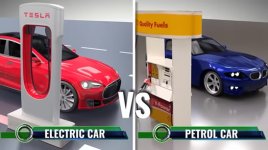
Electric cars (EVs) and petrol cars differ significantly in various aspects, from how they operate to their costs and environmental impact. Here’s a detailed comparison:
1. Operation and Technology
Electric Cars (EVs):
Powered by electric motors that draw energy from batteries.
No internal combustion engine (ICE), exhaust system, or fuel tank.
Rechargeable batteries, typically lithium-ion, provide power.
Petrol Cars:
Powered by an internal combustion engine that burns petrol (gasoline) to generate power.
Have a fuel tank, exhaust system, and various components like spark plugs, oil filters, etc.
2. Range
Electric Cars:
Range: Varies widely based on the model and battery capacity. Modern EVs typically offer a range of 200 to 500 km (125 to 310 miles) on a full charge.
Best Models: Tesla Model S Long Range (~652 km/405 miles), Lucid Air (~832 km/517 miles).
Petrol Cars:
Range: Usually higher, ranging from 500 to 1,000 km (310 to 620 miles) per tank, depending on fuel efficiency and tank size.
Best Models: Toyota Corolla (~800 km/497 miles), Honda Civic (~600 km/373 miles).
3. Cost of Ownership
Electric Cars:
Service Costs: Generally lower due to fewer moving parts (no oil changes, spark plugs, or exhaust system maintenance). However, the battery is a significant cost factor if it needs replacement.
Battery Cost: Can be expensive, with replacement costs ranging from $5,000 to $20,000, depending on the model and battery capacity. Most EV batteries are designed to last at least 8-10 years.
Charging Cost: Charging at home typically costs around $10-$15 for a full charge, depending on local electricity rates. Public fast chargers might be more expensive but still usually cheaper than petrol.
Gas Cost per 100 km: Equivalent electricity cost is approximately $2 to $6, depending on energy efficiency and electricity rates.
Petrol Cars:
Service Costs: Higher, due to the need for regular maintenance like oil changes, air filters, and exhaust system repairs.
Fuel Cost: The average petrol cost is around $10 to $20 per 100 km, depending on the vehicle’s fuel efficiency and local fuel prices.
4. Environmental Impact
Electric Cars:
Emissions: Zero tailpipe emissions, making them cleaner for the environment. However, the environmental impact depends on how the electricity is generated (coal, renewables, etc.).
Lifecycle Impact: Production of EVs, especially batteries, has a higher initial environmental impact, but this is often offset by lower emissions over the vehicle’s lifetime.
Petrol Cars:
Emissions: Emit carbon dioxide (CO2) and other pollutants during operation, contributing to air pollution and climate change.
Lifecycle Impact: Lower initial environmental impact compared to EVs, but higher over the vehicle’s lifetime due to continuous emissions.
5. Best Models and Brands
Electric Cars:
Tesla Model 3: Known for its range, technology, and widespread Supercharger network.
Nissan Leaf: Affordable and widely adopted, especially in urban areas.
Ford Mustang Mach-E: Combines performance with electric efficiency.
Petrol Cars:
Toyota Corolla: Known for its reliability, fuel efficiency, and affordability.
Honda Civic: Popular for its performance, comfort, and long-term reliability.
Ford F-150: A top choice for those needing a powerful and reliable truck.
6. Reliability
Electric Cars:
Generally reliable due to fewer moving parts and lower maintenance requirements. Tesla, Nissan, and BMW are often cited as reliable EV brands.
Petrol Cars:
Reliability varies widely by brand and model. Toyota, Honda, and Lexus are known for producing some of the most reliable petrol cars.
7. History and Resurgence of Electric Cars
First Electric Car: The first electric car was built in the early 19th century. Thomas Davenport is often credited with creating one of the first practical electric vehicles in the 1830s.
When Did Electric Cars Make a Comeback?: After a long period of dominance by petrol cars, electric vehicles began to make a significant comeback in the early 2000s, largely due to environmental concerns, advances in battery technology, and the introduction of models like the Toyota Prius (hybrid, introduced in 1997) and later, the Tesla Roadster in 2008, which demonstrated that EVs could be both practical and desirable.
8. Conclusion
Electric Cars: Ideal for those prioritizing environmental concerns, lower running costs, and who have access to charging infrastructure. Initial costs can be higher, but incentives and lower running costs can balance this over time.
Petrol Cars: Still offer greater range and refueling convenience, and tend to be cheaper upfront. However, they are more expensive to run and maintain in the long term and have a larger environmental footprint.
The choice between electric and petrol largely depends on personal preferences, driving habits, and environmental considerations.
Youtube
1. Operation and Technology
Electric Cars (EVs):
Powered by electric motors that draw energy from batteries.
No internal combustion engine (ICE), exhaust system, or fuel tank.
Rechargeable batteries, typically lithium-ion, provide power.
Petrol Cars:
Powered by an internal combustion engine that burns petrol (gasoline) to generate power.
Have a fuel tank, exhaust system, and various components like spark plugs, oil filters, etc.
2. Range
Electric Cars:
Range: Varies widely based on the model and battery capacity. Modern EVs typically offer a range of 200 to 500 km (125 to 310 miles) on a full charge.
Best Models: Tesla Model S Long Range (~652 km/405 miles), Lucid Air (~832 km/517 miles).
Petrol Cars:
Range: Usually higher, ranging from 500 to 1,000 km (310 to 620 miles) per tank, depending on fuel efficiency and tank size.
Best Models: Toyota Corolla (~800 km/497 miles), Honda Civic (~600 km/373 miles).
3. Cost of Ownership
Electric Cars:
Service Costs: Generally lower due to fewer moving parts (no oil changes, spark plugs, or exhaust system maintenance). However, the battery is a significant cost factor if it needs replacement.
Battery Cost: Can be expensive, with replacement costs ranging from $5,000 to $20,000, depending on the model and battery capacity. Most EV batteries are designed to last at least 8-10 years.
Charging Cost: Charging at home typically costs around $10-$15 for a full charge, depending on local electricity rates. Public fast chargers might be more expensive but still usually cheaper than petrol.
Gas Cost per 100 km: Equivalent electricity cost is approximately $2 to $6, depending on energy efficiency and electricity rates.
Petrol Cars:
Service Costs: Higher, due to the need for regular maintenance like oil changes, air filters, and exhaust system repairs.
Fuel Cost: The average petrol cost is around $10 to $20 per 100 km, depending on the vehicle’s fuel efficiency and local fuel prices.
4. Environmental Impact
Electric Cars:
Emissions: Zero tailpipe emissions, making them cleaner for the environment. However, the environmental impact depends on how the electricity is generated (coal, renewables, etc.).
Lifecycle Impact: Production of EVs, especially batteries, has a higher initial environmental impact, but this is often offset by lower emissions over the vehicle’s lifetime.
Petrol Cars:
Emissions: Emit carbon dioxide (CO2) and other pollutants during operation, contributing to air pollution and climate change.
Lifecycle Impact: Lower initial environmental impact compared to EVs, but higher over the vehicle’s lifetime due to continuous emissions.
5. Best Models and Brands
Electric Cars:
Tesla Model 3: Known for its range, technology, and widespread Supercharger network.
Nissan Leaf: Affordable and widely adopted, especially in urban areas.
Ford Mustang Mach-E: Combines performance with electric efficiency.
Petrol Cars:
Toyota Corolla: Known for its reliability, fuel efficiency, and affordability.
Honda Civic: Popular for its performance, comfort, and long-term reliability.
Ford F-150: A top choice for those needing a powerful and reliable truck.
6. Reliability
Electric Cars:
Generally reliable due to fewer moving parts and lower maintenance requirements. Tesla, Nissan, and BMW are often cited as reliable EV brands.
Petrol Cars:
Reliability varies widely by brand and model. Toyota, Honda, and Lexus are known for producing some of the most reliable petrol cars.
7. History and Resurgence of Electric Cars
First Electric Car: The first electric car was built in the early 19th century. Thomas Davenport is often credited with creating one of the first practical electric vehicles in the 1830s.
When Did Electric Cars Make a Comeback?: After a long period of dominance by petrol cars, electric vehicles began to make a significant comeback in the early 2000s, largely due to environmental concerns, advances in battery technology, and the introduction of models like the Toyota Prius (hybrid, introduced in 1997) and later, the Tesla Roadster in 2008, which demonstrated that EVs could be both practical and desirable.
8. Conclusion
Electric Cars: Ideal for those prioritizing environmental concerns, lower running costs, and who have access to charging infrastructure. Initial costs can be higher, but incentives and lower running costs can balance this over time.
Petrol Cars: Still offer greater range and refueling convenience, and tend to be cheaper upfront. However, they are more expensive to run and maintain in the long term and have a larger environmental footprint.
The choice between electric and petrol largely depends on personal preferences, driving habits, and environmental considerations.
Youtube