

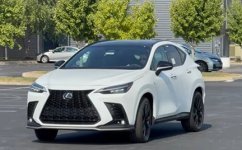
2026 Lexus NX 350 Overview
Based on official Lexus announcements and early reviews, the 2026 Lexus NX 350 receives several meaningful updates across powertrains, trims, and technology.What’s New for the 2026 Lexus NX 350
| Feature / Area | What’s New or Updated in 2026 |
|---|---|
| Powertrains & Drivetrain Options | - NX 350h (hybrid) is now available with Front-Wheel Drive (FWD) in addition to the existing AWD - The “F SPORT Handling” grade (sportier suspension etc.) is now offered across all powertrain configurations more choice. (For the plug-in hybrid NX 450h+, a new Premium grade is now available as a lower-cost entry point. Dual-voltage (Level 1 & Level 2) charging cables are now standard, improving charging flexibility.) model there’s now a Premium grade (lower cost entry point) and dual-voltage charging cables as standard (for level 1 & 2 charging) to improve charging flexibility. |
| Performance & Fuel Economy | NX 350 (2.4-liter turbo, AWD) produces approximately 275 hp and 317 lb-ft of torque, with a 0–60 mph time of around 6.6 seconds. NX 350h hybrid delivers roughly 240 system horsepower. FWD version is slightly slower but offers better combined fuel economy (around 40 mpg). NX 450h+ plug-in hybrid offers an EPA-estimated EV-only range of about 37 miles (≈60 km) and 84 MPGe equivalent efficiency. |
| Grades / Trim Structure | - More trim options: Standard, Premium, Luxury, F SPORT Handling. - F SPORT grades get more exclusive styling, suspension tuning, wheel options, etc. - New colors added, e.g. Infrared for all grades, Ultra White across the lineup. |
| Tech / Convenience | - Upgraded charging flexibility for PHEV (dual-voltage) - More trim shared tech/features (F SPORT handling etc.) across more configurations. - Possibly minor exterior/interior refinements (styling, colors etc.). - Lexus continues to offer strong safety & driver-assist features. |
2026 Lexus NX 350 vs Rivals – How It Compares
Here are strengths and where it may lag when you stack it against other compact luxury / premium crossover SUVs (e.g. BMW X3, Mercedes GLC, Acura RDX, Genesis GV70, etc.):
| Area | Where NX 350 (2026) is Strong | Where Rivals May Have Advantage |
|---|---|---|
| Ride Comfort & Build Quality | Lexus is known for very good fit & finish, quiet cabins, materials. NX does well in luxury feel. The new F SPORT Handling helps for those wanting sportier feel, without giving up too much comfort. | Some rivals (e.g. BMW X3 M Sport, certain trims of GLC) may offer sharper driving dynamics, better cornering, more performance-oriented versions. Also, rivals might have more advanced suspension/damping tuning in upper trims. |
| Powertrain Variety & Efficiency | Lexus offers a broad mix: turbo gas, hybrid, plug-in hybrid. The addition of FWD for 350h gives more efficiency and lower cost. EV-only range in the PHEV (450h+) is competitive. MPG (or MPGe) in hybrid variants is strong. | Some rivals may offer full electric versions (depending on region), or better performance variants. Also, rivals may pull ahead in raw acceleration or top speed in performance trims. The luxury brands often have more powerful options. |
| Features & Trims | 2026 adds more options, more grades, flexibility (e.g. more F SPORT availability, more colors). Premium & F SPORT trims can include desirable features. | Rivals sometimes give more standard tech in base trims (depending on market), or more advanced infotainment, driver-assist features or more aggressive styling options. Might also offer more options for seat comfort, customization, etc. |
| Value / Cost of Ownership | Lexus often has good reputations for reliability, resale value, lower maintenance. The hybrid & PHEV choices help reduce fuel costs for many. The new FWD hybrids may reduce cost vs AWD. | Some competitors may offer cheaper base pricing in certain markets. Also, incentives or tax breaks (especially in PHEV or EVs) might make rivals more attractive, depending on location. Dealership/service network might vary. |
| Electric / Zero Emissions Capability | The 450h+ PHEV is good EV-range but still not a full EV. For those wanting full battery electric, Lexus has fewer options in that segment (depending on region). | Rivals like Mercedes, BMW, Volvo, etc. are pushing more into full EVs or higher EV-range models. If your priority is fully electric, others may pull ahead. |
Verdict: Is It “Meaningfully Better”?
Yes for many buyers, the 2026 updates are meaningful. The things that stand out:
More flexibility: FWD hybrid option for lower cost / better efficiency.
More trim & styling options (F SPORT Handling across more variants) is nice for people wanting sportier looks-and-feel.
PHEV gets dual-voltage charging and a good EV-only range, which is a strong selling point for those wanting to cut fuel usage / emissions.
Attachments
Last edited:

