

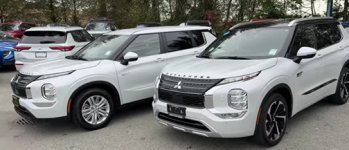
The 2025 Mitsubishi Outlander Plug-In Hybrid Electric Vehicle (PHEV) offers a versatile lineup catering to various preferences and budgets. Understanding the distinctions between the base and fully loaded models can assist potential buyers in making informed decisions. Here's a detailed comparison:
Visual Comparison
For a comprehensive visual comparison between the base and fully loaded 2025 Outlander PHEV models, you can refer to the following video:
Engine and Performance
Engine: Both models are equipped with a 2.4-liter inline-4 engine paired with twin electric motors.
Horsepower: Combined output of 248 horsepower.
Torque: 332 lb-ft.
Transmission: Single-speed fixed reduction gear.
Drivetrain: All-Wheel Drive (AWD).
Battery and Electric Range
Battery Capacity: 20 kWh lithium-ion battery.
Electric Range: Approximately 38 miles on electric power alone.
Fuel Economy
MPGe: 74 MPGe (Miles Per Gallon equivalent).
Gasoline Only: 26 MPG combined.
Towing Capacity
Both trims offer a towing capacity of up to 1,500 lbs.
Dimensions and Capacities
Seating Capacity: 7 passengers.
Cargo Space: 11.7 cubic feet behind the third row; up to 66.6 cubic feet with second and third rows folded.
Ground Clearance: 8.3 inches.
Curb Weight: Approximately 4,900 lbs.
Features and Equipment
Base Model:
Infotainment: 8-inch touchscreen with Apple CarPlay and Android Auto.
Safety: Forward collision mitigation, lane departure warning, blind-spot monitoring.
Wheels: 18-inch alloy wheels.
Fully Loaded Model:
Infotainment: 9-inch touchscreen with integrated navigation.
Audio: Premium Bose sound system with multiple speakers.
Interior: Leather upholstery, panoramic sunroof, heated and ventilated front seats.
Safety: Adaptive cruise control, surround-view camera system, parking sensors.
Wheels: 20-inch alloy wheels.
Pricing
Base Model: Starting at approximately $39,845.
Fully Loaded Model: Can exceed $49,000 with additional packages and options.
Pros and Cons
Pros:
Base Model: More affordable, retains essential features, efficient hybrid system.
Fully Loaded Model: Enhanced luxury and technology features, superior audio system, advanced safety technologies.
Cons:
Base Model: Lacks some premium features, smaller wheels may affect aesthetics.
Fully Loaded Model: Higher price point, increased weight may slightly reduce efficiency.
Additional Considerations
Warranty: Both models come with Mitsubishi's standard warranty, including a 10-year/100,000-mile powertrain warranty.
Maintenance and Insurance: Annual maintenance costs and insurance premiums will vary based on location, driving habits, and individual insurance providers.
Performance in Various Conditions: Electric range and fuel efficiency can be affected by extreme temperatures. Cold weather may reduce battery performance, while hot weather can impact overall efficiency.
Conclusion
The 2025 Mitsubishi Outlander PHEV offers versatility to meet diverse consumer needs. The base model provides a cost-effective entry into the plug-in hybrid SUV market, delivering essential features and reliable performance. In contrast, the fully loaded model caters to those seeking luxury, advanced technology, and enhanced comfort, albeit at a higher price point. Prospective buyers should assess their priorities and budget to determine which trim aligns best with their preferences.
#Mitsubishi Outlander Plug-In Hybrid Electric
Visual Comparison
For a comprehensive visual comparison between the base and fully loaded 2025 Outlander PHEV models, you can refer to the following video:
Engine and Performance
Engine: Both models are equipped with a 2.4-liter inline-4 engine paired with twin electric motors.
Horsepower: Combined output of 248 horsepower.
Torque: 332 lb-ft.
Transmission: Single-speed fixed reduction gear.
Drivetrain: All-Wheel Drive (AWD).
Battery and Electric Range
Battery Capacity: 20 kWh lithium-ion battery.
Electric Range: Approximately 38 miles on electric power alone.
Fuel Economy
MPGe: 74 MPGe (Miles Per Gallon equivalent).
Gasoline Only: 26 MPG combined.
Towing Capacity
Both trims offer a towing capacity of up to 1,500 lbs.
Dimensions and Capacities
Seating Capacity: 7 passengers.
Cargo Space: 11.7 cubic feet behind the third row; up to 66.6 cubic feet with second and third rows folded.
Ground Clearance: 8.3 inches.
Curb Weight: Approximately 4,900 lbs.
Features and Equipment
Base Model:
Infotainment: 8-inch touchscreen with Apple CarPlay and Android Auto.
Safety: Forward collision mitigation, lane departure warning, blind-spot monitoring.
Wheels: 18-inch alloy wheels.
Fully Loaded Model:
Infotainment: 9-inch touchscreen with integrated navigation.
Audio: Premium Bose sound system with multiple speakers.
Interior: Leather upholstery, panoramic sunroof, heated and ventilated front seats.
Safety: Adaptive cruise control, surround-view camera system, parking sensors.
Wheels: 20-inch alloy wheels.
Pricing
Base Model: Starting at approximately $39,845.
Fully Loaded Model: Can exceed $49,000 with additional packages and options.
Pros and Cons
Pros:
Base Model: More affordable, retains essential features, efficient hybrid system.
Fully Loaded Model: Enhanced luxury and technology features, superior audio system, advanced safety technologies.
Cons:
Base Model: Lacks some premium features, smaller wheels may affect aesthetics.
Fully Loaded Model: Higher price point, increased weight may slightly reduce efficiency.
Additional Considerations
Warranty: Both models come with Mitsubishi's standard warranty, including a 10-year/100,000-mile powertrain warranty.
Maintenance and Insurance: Annual maintenance costs and insurance premiums will vary based on location, driving habits, and individual insurance providers.
Performance in Various Conditions: Electric range and fuel efficiency can be affected by extreme temperatures. Cold weather may reduce battery performance, while hot weather can impact overall efficiency.
Conclusion
The 2025 Mitsubishi Outlander PHEV offers versatility to meet diverse consumer needs. The base model provides a cost-effective entry into the plug-in hybrid SUV market, delivering essential features and reliable performance. In contrast, the fully loaded model caters to those seeking luxury, advanced technology, and enhanced comfort, albeit at a higher price point. Prospective buyers should assess their priorities and budget to determine which trim aligns best with their preferences.
#Mitsubishi Outlander Plug-In Hybrid Electric
Last edited:
