

Second-Life Batteries: The Fastest-Growing Energy Trend of 2025
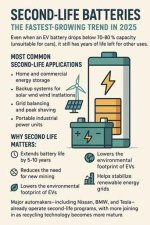
By 2025, second-life electric vehicle (EV) batteries have become one of the most important trends in clean energy, reshaping how we store, manage, and use power around the world.
When an EV battery drops below 70–80% capacity, it’s no longer suitable for powering cars but it still has many years of high-value performance left. Instead of going straight to recycling, these batteries are now entering their second life in a rapidly expanding global market.
What Are Second-Life Batteries?
A second-life battery is a used EV battery repurposed for applications where lower capacity is not a problem. While no longer ideal for long-range driving, these batteries continue to deliver stable, reliable power in stationary or low-demand environments.
By giving batteries a second life before recycling, manufacturers and energy companies unlock huge environmental and economic benefits.
Most Common Second-Life Battery Applications
1. Home & Commercial Energy Storage
These batteries are used in systems that store energy from:
- Solar panels
- Wind turbines
- Off-peak grid electricity
2. Backup Systems for Solar & Wind
Renewables need reliable backup. Second-life batteries ensure:
- Smooth energy output
- Protection during outages
- More consistent performance during cloudy or low-wind days
3. Grid Balancing & Peak Shaving
As grids face rising demand from electrification, utilities use second-life batteries to:
- Reduce peak-hour strain
- Balance energy supply and demand
- Support frequency regulation
4. Portable Industrial Power Units
Construction sites, film sets, and remote locations increasingly use second-life battery packs instead of diesel generators. These provide:
- Zero emissions
- Lower operating costs
- Quiet, reliable power
Why Second Life Matters in 2025
Second-life batteries aren’t just a trend they’re a critical part of the global clean-energy transition.
Extends Battery Life by 5–10 Years
Instead of recycling batteries immediately, companies extract years of additional value.Reduces the Need for New Mining
Every repurposed battery means less demand for:
- Lithium
- Cobalt
- Nickel
- Other critical minerals
Cuts the Carbon Footprint of EVs
Pairing EV ownership with second-life applications improves total lifecycle sustainability by reducing waste and increasing material utility.Strengthens Renewable Energy Infrastructure
Second-life systems help renewable energy achieve:
- Higher reliability
- Better storage capacity
- Greater grid compatibility
Who’s Leading the Second-Life Battery Movement?
Major automakers and energy companies are investing heavily in second-life programs:
Nissan
- Launched the LEAF battery reuse program
- Powers commercial buildings and city infrastructure with repurposed packs
BMW
- Operates large-scale energy storage systems using retired BMW i3 batteries
Tesla
- Integrates used battery modules into various commercial and utility-scale projects
Others entering fast:
Volkswagen, Mercedes-Benz, BYD, Rivian, and Hyundai are all investing in second-life commercialization as recycling technology matures.How Second-Life Batteries Are Processed
The typical repurposing workflow includes:
- Collection of retired EV batteries
- Health assessment and diagnostic testing
- Module sorting (good modules reused, bad ones recycled)
- Repackaging into new battery systems
- Deployment for home, commercial, or grid use
Advanced analytics and AI are improving lifespan prediction and safety standards, making second-life usage more reliable than ever.
The Market Outlook for 2025 and Beyond
Industry analysts predict:
- The global second-life battery market will exceed $9–12 billion by 2030
- Over 15 million EV batteries will reach end-of-vehicle-life by 2035
- Demand for stationary energy storage is growing faster than ever
With world governments pushing renewable integration, second-life batteries will play a central role in building a clean, resilient future.
Conclusion: A Smarter, Cleaner Battery Future
Second-life EV batteries are no longer an experiment they’re a mainstream solution driving sustainability, affordability, and energy security. Extending battery life, reducing waste, and supporting renewable energy makes second-life technology one of the most impactful innovations of 2025.
As adoption accelerates, second-life batteries will help reshape not only the EV industry but the entire global energy ecosystem.