

Hyundai Tucson Plug-In Hybrid (PHEV)
Hyundai Tucson Plug-In Hybrid
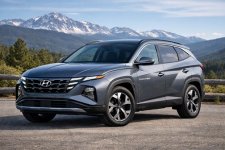
The Smart Middle Ground Among 2025’s Best Plug-In SUVs
If you’ve been looking at plug-in hybrid SUVs lately, you’ve probably noticed something: many of them are either too big, too expensive, or trying too hard to be luxury cars. That’s exactly where the Hyundai Tucson Plug-In Hybrid steps in confidently sitting in the sweet spot between size, technology, efficiency, and price.
Often described as the “sibling model” of the Kia Sportage PHEV, the Tucson PHEV has earned its place on multiple “Best Plug-In Hybrid SUVs of 2025” lists in the United States. And not by accident. It’s one of those rare vehicles that actually makes sense for real life commuting, family use, road trips, and even occasional off-road adventures.
Let’s break down why the Tucson PHEV is such a compelling choice, especially if you want plug-in benefits without committing to a massive SUV or a full EV lifestyle.
Design: Modern Without Being Overdone
The Tucson’s design was a bold move when Hyundai introduced this generation and it still looks fresh in 2025.
Instead of playing it safe, Hyundai went with:
- Sharp geometric lines
- Parametric grille design
- Integrated LED daytime running lights
- A wide, planted stance that feels more upscale than “compact SUV”
Inside, the story continues:
- Dual panoramic displays
- Touch-based climate controls
- High-quality materials (especially in Limited trim)
- Plenty of room for adults in both rows
Plug-In Hybrid Powertrain: The Best of Both Worlds
This is where the Tucson PHEV really shines.
Under the hood, you get:
- 1.6L turbocharged gasoline engine
- Electric motor
- 13.8 kWh battery
- Combined system output: 261 horsepower
- Standard AWD in the US
Electric Range (Real-World Useful)
The EPA-rated electric-only range is about 33 miles, which may not sound huge — until you realize that for most Americans:
- Daily commuting
- School runs
- Grocery shopping
Plug it in overnight, and you may go days without using a drop of gasoline.
When the battery runs out?
No problem it seamlessly switches to hybrid mode, eliminating range anxiety completely.
Driving Experience: Calm, Confident, and Comfortable
The Tucson PHEV is not a sports SUV, and it doesn’t pretend to be. Instead, it focuses on:
- Smooth acceleration
- Quiet electric driving at low speeds
- Confident highway merging
- Stable handling thanks to AWD
On the highway, the turbo engine provides enough power that the car never feels underpowered, even when fully loaded with passengers and cargo.
This makes it an excellent one-car solution for families or professionals who want efficiency without sacrificing versatility.
Technology & Safety: Fully Loaded Where It Counts
Hyundai has built a strong reputation in the US for offering top-tier tech at non-luxury prices, and the Tucson PHEV continues that trend.
Key Features (US Market)
- Hyundai SmartSense safety suite (standard)
- Adaptive cruise control with stop & go
- Lane keeping & lane following assist
- Blind-spot monitoring
- Surround-view monitor (higher trims)
- Apple CarPlay & Android Auto
- Digital key (select trims)
How It Compares: Tucson PHEV vs Key Rivals
Here’s a quick US-market comparison table to put things into perspective:
| Model | Electric Range | Total Power | AWD | Starting MSRP (USA) |
|---|---|---|---|---|
| Hyundai Tucson PHEV | ~33 miles | 261 hp | Yes | ~$39,000 |
| Kia Sportage PHEV | ~34 miles | 261 hp | Yes | ~$39,500 |
| Toyota RAV4 Prime | ~42 miles | 302 hp | Yes | ~$43,000 |
| Ford Escape PHEV | ~37 miles | 210 hp | No AWD | ~$38,400 |
What stands out?
- Better value than RAV4 Prime
- AWD advantage over Ford Escape PHEV
- Similar performance to Sportage, but with a different design philosophy
Ownership Costs & Incentives (USA)
While federal EV tax credits for PHEVs have become more complex, state-level incentives and local utility rebates can still make the Tucson PHEV financially attractive.
Benefits include:
- Lower fuel costs
- Reduced maintenance compared to gas-only SUVs
- Potential HOV lane access in certain states
- Strong warranty coverage
- Competitive maintenance programs
- Hyundai USA Tucson PHEV page:
hyundaiusa.coms
fueleconomy.gov
Federal & state incentives overview:
energy.gov
Who Is the Tucson PHEV Really For?
This car makes the most sense if you:
- Want plug-in electric driving without full EV commitment
- Don’t want a huge SUV
- Value comfort, safety, and technology
- Have access to home or workplace charging
- Want AWD for weather or light off-road use
Final Verdict: A Thoughtful, Well-Balanced Plug-In SUV
The Hyundai Tucson Plug-In Hybrid isn’t about hype. It’s about balance.
It balances:
- Electric driving and gasoline flexibility
- Modern design and practical interior space
- Performance and efficiency
- Price and premium features
In a market full of compromises, the Tucson PHEV feels like a carefully thought-out solution and that’s why it consistently appears among the best plug-in hybrid SUVs in the US for 2025.
If you’re looking for a plug-in SUV that fits into real life instead of forcing you to adapt to it, the Tucson PHEV deserves a very serious look.