

The Challenge: Pushing PHEV Utes to Their Limits
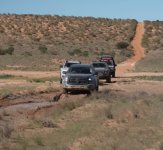
Imagine this: three of the most hyped plug-in hybrid (PHEV) dual-cab utes BYD Shark 6, Ford Ranger PHEV and GWM Cannon Alpha PHEV loaded up and sent on a brutal 4,000 kilometre “torture test” across Australia. From urban streets to rugged outback, from dirt tracks to towing heavy loads the plan was to reveal once and for all whether these EV-hybrid trucks are ready for real overland adventure and heavy-duty work, or if they remain shiny urban toys.
Spoiler: they all failed.
Why They Were Supposed to Be the Future
There’s plenty of appeal behind PHEV utes like Shark, Ranger, Cannon:
- BYD Shark 6 offers a 29.6 kWh lithium-ion battery (LFP blade battery) with electric AWD, instant torque, and respectable 0–100 km/h acceleration (~ 5.7 s) impressive "EV-like" performance.
- GWM Cannon and Ford Ranger PHEV promised to combine off-road readiness, towing capacity, and a greener footprint than traditional diesel utes a tempting pitch in a world slowly shifting toward electrification.
- The hope: get the benefits of electric power (low-speed torque, silent operation, potential campsite V2L power) without giving up the traditional strengths of a ute off-road capability, towing, load, and endurance.
What the 4,000 km Test Exposed
But theory seldom survives the real world. Here’s what went wrong and why the test concluded they are “not ready for Australia.”
Tiny EV Range in Real Conditions
- Although official specs sometimes claim a generous electric range (~80 km for BYD Shark under NEDC), the real-world results are starkly different. Mixed highway, off-road, and towing conditions dropped electric-only range to only 30–50 km sometimes much less.
- Off-road driving notably drains the battery fast; sand, hills, rough terrain all brutal for electric range. Once the battery empties, the vehicle resorts to hybrid mode, which undermines efficiency and performance.
Towing and Payload Compromises
- For example, BYD Shark’s towing capacity is just 2,500 kg, and payload around 790 kg modest compared to what heavy-duty users expect. CarsGuide
- That’s lower than many traditional diesel utes, meaning that towing a serious trailer or boat already pushes the limits and when battery is drained, the electric boost vanishes, leaving the 1.5 L turbo engine under strain.
- Also, large battery packs (as in Shark or Cannon) add weight and reduce payload or complicate spare-tire placement and overall vehicle balance.
Off-Road Skills - Not What You’d Hope
- The BYD Shark lacks mechanical low-range gearing; it relies on electronic AWD and torque management okay for mild terrain, but not enough for demanding off-road conditions.
- In contrast, GWM Cannon features a true mechanical 4×4 with low-range and differential lock but even that was tested to its limits, and the battery drain / hybrid engine under load made the test result questionable for long, rugged journeys.
- For something like the Australian Outback remote, hot, sandy, with hills and varying terrain these PHEV utes simply proved to be overmatched.
Battery vs Reality: A Fundamental Trade-Off
- The bigger the battery (to get more EV-only range), the more weight and complexity which negatively affects towing, off-road, and payload. Smaller battery (like in Ranger PHEV) means shorter electric range but better load handling.
- In long-distance, heavy-duty use, once battery runs out, you’re back to the internal combustion engine losing many of the benefits that made EV/PHEV appealing in the first place (silence, torque, efficiency).
Verdict: Not Ready Not Unless Use Cases Are Narrow
After 4,000 km of harsh towing, off-road tracks, and remote-area driving, conclusions are hard to ignore:
- These PHEV utes are not yet ready for heavy-duty off-road, long-haul towing or serious outback work.
- They might serve well for light towing, city commuting, weekend camping, occasional beach/off-road fun especially where EV torque and silent driving matter.
- But for those who expect a workhorse heavy towing, frequent long trips, rugged terrain traditional diesel or purpose-built 4×4 utes remain the safer bet.
Put simply: PHEV dual-cabs like Shark, Ranger PHEV or Cannon are currently a compromise a “jack of many trades, master of none.” The real-world test exposed that the compromises are too many and the trade-offs too severe if you want real capability.
What This Means for the Future of EV/PHEV Utes
This isn’t necessarily the end of electric or hybrid utes. It’s a wake-up call.
- For EV/PHEV makers: if you want to truly challenge diesel 4×4 utes for off-road/towing supremacy, battery-electric range alone isn’t enough. You must consider payload, towing strength, mechanical gearing (diff-locks, low-range), suspension, reliability under load, and energy management.
- For buyers: understand that PHEV utes might excel in suburban driving + light-duty use but for heavy work, long-distance towing or remote off-road fun, traditional tools remain more reliable.
- For regulators & EV evangelists: the “green transition” narrative must account for real-world use cases not just city commuting. Utes have to prove themselves under tough conditions to earn their place.
Final Thoughts
The 4,000 km off-road + towing test was a brutal reality check for the current generation of PHEV dual-cab utes. The promise of “electric power + traditional capability” looked alluring but once the rubber met the sand, gravel, hills and heavy loads, the limitations showed.
BYD Shark 6, Ford Ranger PHEV, and GWM Cannon Alpha PHEV may be fine for light-towing, suburban-commute EV-style use or occasional off-road weekend trips but they’re not (yet) ready to replace heavy-duty diesel utes when the job demands real-world toughness.