

A lot of plug-in hybrid owners barely charge their cars and that completely defeats the point.
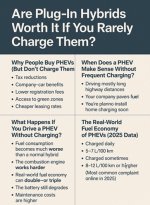
Plug-in hybrids (PHEVs) promise “the best of both worlds”: electric driving for short trips and gasoline for long distances. But there’s a growing problem many PHEV owners barely ever charge their cars.
The question people search for the most in 2025 is simple:
“Is a plug-in hybrid worth it if I don’t charge it?”
The honest answer is: usually not.
But the full truth is more nuanced and that’s what this guide explains.
Why People Buy PHEVs (But Don’t Charge Them)
In many countries, PHEVs qualify for:- Tax reductions
- Company-car benefits
- Lower registration fees
- Access to green zones
- Cheaper leasing rates
Yet these cars are designed for frequent charging. When they are not charged regularly, they lose most of their fuel-economy advantages.
What Happens If You Drive a PHEV Without Charging?
This is the part manufacturers don’t talk about enough.
If you rarely or never charge a plug-in hybrid:
1. The fuel consumption becomes much worse than a normal hybrid
A PHEV is heavier because of:- A large battery
- An electric motor
- Reinforced chassis
- Additional electronics
2. The combustion engine ends up working harder
When the battery is empty:- The engine must move a heavier car
- Regeneration helps only slightly
- Acceleration feels weaker
- Fuel usage spikes
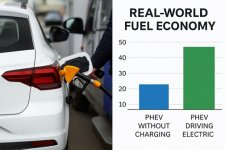
3. Real-world fuel economy can double or even triple
Search trends show people experiencing numbers like:- 8–12 L/100 km (30–15 mpg) in city driving
- 6–9 L/100 km (40–26 mpg) on highways
4. The battery still degrades
Even without charging, the battery cycles partially during:- Acceleration boosts
- Regenerative braking
- Energy buffering
You don’t use the EV benefit, but you still carry the long-term cost.
5. Maintenance costs are higher
A PHEV has two full drivetrains:- Electric system
- Combustion engine
Real Search Question: Is a PHEV worth it without charging?
If you don’t charge it, a PHEV is simply:
Heavier
More complex
More expensive
Worse fuel economy
Less reliable long-term
A full hybrid (HEV) or modern petrol/diesel car is often the better choice.
When Does a PHEV Make Sense Without Frequent Charging?
There are a few exceptions where owning a PHEV might still work:You drive mostly long highway distances
Electric driving doesn’t matter much here.Fuel consumption may still be acceptable.
Your company pays for fuel
Many corporate fleets buy PHEVs because of tax advantages.In this case, personal cost is minimal.
You know you’ll install home charging soon
Some buyers plan ahead new house, new garage, upcoming EV charger installation.But overall, the true value of a PHEV comes only when plugged in regularly.
How Often Should You Charge a PHEV to Make It “Worth It?
Most PHEVs shine when charged:At least 3–4 times per week
This allows:- Daily electric commuting
- 30–80 km EV range per day (depending on the model)
- Major fuel savings
- Low emissions
- Quiet electric driving in cities
The Real-World Fuel Economy of PHEVs (2025 Data)
What drivers actually report not lab tests:1. Charged daily
- 2–4 L/100 km
- Up to 80% of trips in full electric mode
- Best case scenario
2. Charged sometimes
- 5–7 L/100 km
- Mostly hybrid use with occasional EV benefit
3. Never charged
- 8–12 L/100 km or higher
- Worst case: behaves like an overweight gasoline car
- This is the most common complaint online in 2025
Frequently Asked Questions
Can you drive a plug-in hybrid without charging?
Yes, absolutely. All PHEVs can operate on gasoline alone.
Is it harmful to not charge a PHEV?
Not harmful mechanically, but damaging to your wallet due to high fuel usage.Does a PHEV charge itself while driving?
Only a tiny amount nowhere near full.It cannot replace external charging.
Is a PHEV good for people without home charging?
Usually no.A conventional hybrid is more efficient in that scenario.
Why do PHEVs have such bad mileage when the battery is empty?
Because the car is heavy and the engine must do all the work.What is the ideal use case for a PHEV?
Short daily commutes with charging at home or work.So… Is a PHEV Worth It If You Rarely Charge It?
In 2025, the clear answer is: mostly no.
A plug-in hybrid delivers real value only when:You can charge it often
You have access to home or workplace charging
Most trips are short or medium range
If you cannot plug in frequently, you’re better off with:
- A full hybrid (HEV)
- A modern gasoline car
- A diesel for long-distance drivers
- Or a full EV if charging becomes easier later
Conclusion: The Truth People Really Need
A PHEV is an amazing tool in the right hands.
But if you won’t charge it regularly, it becomes:
More expensive
Less efficient
More complicated
This is why so many drivers in 2025 regret buying a plug-in hybrid without understanding how it must be used.
So why are so many people still buying PHEVs without planning to plug them in?
Last edited by a moderator: