

A turning point: why EVs & hybrids matter in Singapore
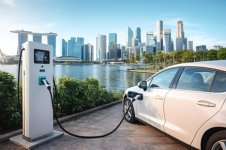
Singapore’s government has set a clear direction toward cleaner mobility. Under the Singapore Green Plan 2030, all new car registrations from 2030 onward must be “cleaner-energy models”
LTA ➚
— including EVs, hybrids or fuel-cell vehicles.
Diesel car registrations are already being phased out starting 2025.
Ita.gov.sg ➚
This official policy push, together with financial incentives and growing infrastructure for charging, has primed the market making EVs and hybrids more than niche “eco choices.” They’re becoming mainstream contenders.
What people in Singapore currently prefer: ICE, hybrid, or BEV?
A recent survey by Deloitte (2025) shows that among Singapore car-buyers:
- 41 % still plan to get a traditional petrol/diesel (ICE) vehicle as their next car.
- Business Times ➚
- 31 % choose a hybrid (or plug-in hybrid, PHEV) as their next car.
- Only 12 % pick a full battery electric vehicle (BEV) as next vehicle.
So hybrids remain the most popular “cleaner-energy” option for now, while fully electric cars are still a minority, though growing fast.
Why? The study identifies these as the most important reasons for choosing hybrid/EV: lower “fuel” cost (62 %), government incentives (48 %), and reduced maintenance needs (47 %) for EVs/hybrids vs ICE cars.
Among BEV-buyers, the top motivations are: better performance than ICE cars (33 %), status symbol (30 %), and environmental concern (29 %).
EY Singapore ➚
But full BEV uptake faces hesitations. The main worries among consumers: time needed for charging (47 %), lack of charging infrastructure (44 %), and battery-safety concerns (40 %) in 2025.
EV adoption & infrastructure: recent trends
Things are accelerating:
- In early 2024, EVs accounted for ~32.6 % of new car registrations (Jan–May).
- Carz.com.my ➚
- By first quarter 2025, some reports suggest EV registrations rose to ≈ 40 % of new cars.
Simultaneously, the EV charging network has expanded rapidly:
- As of mid-2024, there were 3,661 public “EV charging bays (EVCB)” island-wide.
- Counting private residences, commercial buildings, condos etc., total public + private charging points are growing part of a long-term plan to install up to 60,000 chargers by 2030.
- IEOM Society ➚
According to local provider data: the ratio of public chargers to EVs in Singapore is ~3:1 - high by global standards, which helps reduce “range anxiety.”
All this suggests EVs and hybrids are no longer fringe: they are steadily becoming viable mainstream options for many drivers.
What it costs to charge - and why hybrid stays safer bet for many
Charging infrastructure exists but costs and convenience matter. As of 2024–2025 data:
- Public fast / DC charging stations: typical rates are around S$0.55–0.70 per kWh depending on provider and speed.
- GetSolar Singapore ➚
- For a typical mid-range EV (say 50–60 kWh battery), a full charge might cost between ~S$27–40 depending on charger & current electricity tariffs.
- Many owners especially those living in apartments or HDB flats may rely on public chargers rather than home charging, which makes running costs and convenience more variable. Survey respondents indeed flagged “availability and reliability of charging infrastructure” as a top concern.
- Ey ➚
By contrast, hybrids often require no public charging they use petrol/diesel for longer drives plus battery power where possible, so they combine flexibility with lower operating costs without relying on charger availability. This “best of both worlds” explains their popularity.
Real-world trade-offs: BEV vs Hybrid vs ICE in Singapore
Putting it all together, here’s how the three major car types stack up for a typical Singapore driver in 2025:
| Type | Pros | Cons |
|---|---|---|
| Hybrid / PHEV | Lower fuel cost vs ICE, no reliance on public chargers, lower maintenance than ICE, some incentive support. | Still need fuel for long trips; fuel savings depend on how much you drive on battery vs petrol. |
| BEV (full electric) | Zero tailpipe emissions; low energy cost per km; ideal if you can charge regularly; aligns with government 2040 plan; rebates / incentives can lower purchase cost. | Charging infrastructure still uneven (some apartments, condos, HDB areas harder); charging takes time; higher upfront price (even after subsidies); battery & range anxiety; public charging costs and queue-times. |
| ICE (petrol / diesel car) | Wide availability, predictable fueling (petrol stations everywhere), long range, no charging hassle. | Fuel costs higher (over time), maintenance higher, future regulations may penalize ICE cars, rising congestion & pollution. |
Given Singapore’s small size, dense city layout and many short/urban trips, hybrids and increasingly BEVs hit a “sweet spot” of practicality + lower long-term cost + future-proofing. Especially for people living in HDB flats or condos without guaranteed home-charging, hybrid cars represent a risk-averse middle ground.
Policy & Outlook: What the future could bring (to 2030+)
The government’s roadmap remains clear:
- All new registrations to be “cleaner energy” by 2030 - i.e. ICE will be phased out.
- Green Plane ➚
- Hundreds of thousands of charging points planned (target up to 60,000 chargers), including in HDB car parks, condos, malls and workplaces.
- Incentives remain for EV adoption: registration fee rebates, lower emission-vehicle credits, and grants for charger installation though some rebates are being phased down toward 2026.
For drivers, this means: EVs and hybrids will likely become more attractive and practical in the next few years. As range anxiety and infrastructure gaps shrink, BEVs may overtake hybrids - especially for people who live in condos with dedicated chargers, or who mostly drive in the city.
But for now, many Singaporeans seem to prefer hybrids because they balance flexibility, cost, and convenience without forcing a full switch.
For you - what to consider if you move / visit Singapore and plan to buy or rent a car
- If you live in an HDB flat or condo without a private charger, a hybrid may be the most practical choice.
- If you can guarantee regular charging (at home or at work / condo / mall), a BEV could offer long-term savings and cleaner driving.
- Factor in public charging costs (~S$0.55–0.70/kWh), and occasional waiting especially in busy areas or shopping-centre car parks.
- Think long-term: government incentives will fade, but regulations will tilt in favor of “cleaner” cars might boost resale value for EV/hybrid and make ICE cars less desirable after 2030.
- For occasional long trips e.g. cross-island rides, or travelling outside city a hybrid (or plug-in hybrid) may still offer unmatched flexibility compared to many BEVs.
Final Thoughts
Singapore is on a clear path toward electrified, sustainable mobility. Hybrids currently reign as the “bridge” solution — offering cost savings, convenience and fewer compromises than pure ICE cars. BEVs are rapidly catching up, fuelled by improving infrastructure, government incentives, and growing social acceptance.
In 2025–2026, owning a hybrid or EV in Singapore isn’t just about going “green” - it’s often smarter money-wise and more practical than sticking to petrol or diesel.
Feel free to drop a comment below - even if you’re still deciding whether you’re Team Hybrid, Team EV, or just Team “I’ll Uber Instead”!
