

2026 Toyota RAV4 First Drive – All Hail the Return of North America’s Top Crossover!
Key Takeaways
The 2026 Toyota RAV4 marks a major update to one of the world’s best-selling SUVs. It’s now hybrid-only, with both standard hybrid (HEV) and plug-in hybrid (PHEV) versions, reflecting Toyota’s full transition toward electrified powertrains. The model introduces new styling, a more rigid chassis, upgraded technology, and improved performance while keeping the RAV4’s signature reliability and practicality.
Overview and Design Innovations
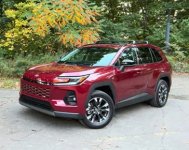
Compared with the 2025 RAV4, the 2026 edition features a complete redesign. The exterior adopts Toyota’s new “hammerhead” front fascia, slimmer LED headlights, wider stance, and modernized proportions. It looks more premium and athletic, especially in Sport and GR Sport trims.
Inside, the cabin has been redesigned with higher-quality materials, a new digital cockpit, and a simplified center console. The dashboard integrates a 12.3-inch driver display and a new 12.9-inch touchscreen on higher trims. Ambient lighting and improved sound insulation make the interior feel more upscale.
Toyota also introduces its Arene software platform, enabling over-the-air (OTA) updates for infotainment and safety systems — a first for the RAV4.
Performance and Range Enhancements
All 2026 RAV4s are electrified:
- Hybrid (HEV): About 226 hp (FWD) or 236 hp (AWD). Improved efficiency and smoother transitions between electric and gas power.
- Plug-in Hybrid (PHEV): Around 320 hp, offering up to 50 miles (≈80 km) of electric-only range — a notable improvement over the previous 42-mile range.Acceleration: The PHEV does 0–60 mph in about 5.5–6.0 seconds, making it one of the quickest compact crossovers in its class.
Ride quality has also been upgraded: the chassis is stiffer, suspension retuned, and steering more precise. GR Sport trims add firmer dampers and sportier handling, while the Woodland Edition prioritizes rugged comfort.
Battery Life and Charging
The RAV4 PHEV’s larger lithium-ion battery supports Level 2 AC charging (about 2.5 hours for full charge) and DC fast charging (10–80% in ~30 minutes) on select trims. Toyota continues to provide an 8-year/100,000-mile hybrid battery warranty. Battery durability is expected to remain one of the strongest in the segment.
Safety and Driver Assistance
Safety remains a Toyota hallmark. The 2026 RAV4 debuts Toyota Safety Sense 3.5, including:
- Pre-collision warning with pedestrian and cyclist detection
- Adaptive cruise control with lane-change assist
- Lane-centering and road-edge detection
- Traffic sign recognition
- Predictive cornering speed control
- Automatic emergency braking and cross-traffic alert
Interior Comfort and Technology
Inside, the 2026 RAV4 offers a quieter, more tech-focused cabin:
- Displays: 7-inch to 12.3-inch driver cluster, 10.5- to 12.9-inch infotainment touchscreen.
- Infotainment: Wireless Apple CarPlay, Android Auto, voice-activated assistant, and cloud-based navigation.
- Comfort: Available heated and ventilated seats, panoramic glass roof, and ambient lighting.
- Materials: Higher trims use soft-touch surfaces and contrast stitching; base models still feature durable plastics.
Space and Practicality
Despite added tech, the RAV4 remains one of the most versatile compact SUVs:
- Cargo capacity: around 37.5 cu ft (1,062 L) behind rear seats, expanding to 69.5 cu ft (1,967 L) with seats folded.
- Flat load floor and power tailgate make it family-friendly.
The PHEV loses a little cargo volume due to the larger battery, but not significantly.
Sustainability and Eco-Efficiency
The 2026 RAV4’s hybrid-only lineup cuts emissions substantially.
- Toyota reports up to 15% better fuel economy vs the outgoing model.
- The PHEV’s electric-only capability means many daily commutes can be completed with zero tailpipe emissions.
- Eco-friendly cabin materials and lighter aluminum components improve sustainability.
Customer Impressions and Early Feedback
Early media reviews and test drives are highly positive:
Likes:
- Strong acceleration from PHEV
- Smooth hybrid transitions
- Improved ride comfort
- Modern design and infotainment
- Toyota reliability
Critiques:
- Base trims still feel a bit utilitarian
- Price increase vs 2025 model
- Some climate controls now touch-based, which not all drivers prefer
Availability and Pricing
- U.S. market launch: late 2025 (2026 model year)
- Europe and Canada: early 2026
- Starting prices (U.S.):
- Hybrid (HEV): ≈ $33,000–$35,000
- Plug-in Hybrid (PHEV): ≈ $45,000–$50,000, depending on trim
- Top GR Sport or Limited PHEV trims may exceed $52,000.
Reservations are expected to open mid-2025 via Toyota’s official site and dealerships.
Conclusion
The 2026 Toyota RAV4 reaffirms why it’s North America’s favorite crossover. It’s cleaner, quicker, smarter, and more refined, combining strong hybrid performance with Toyota’s hallmark dependability.
Buyers can choose between a fuel-efficient hybrid or a high-performance plug-in hybrid with impressive electric range. With better design, advanced safety tech, improved ride quality, and enhanced digital systems, the 2026 RAV4 feels like a true next-generation SUV — built for drivers who value both sustainability and practicality.
Bottom line: The RAV4 remains the benchmark in the compact-SUV segment — only now, it’s smarter and greener than ever.